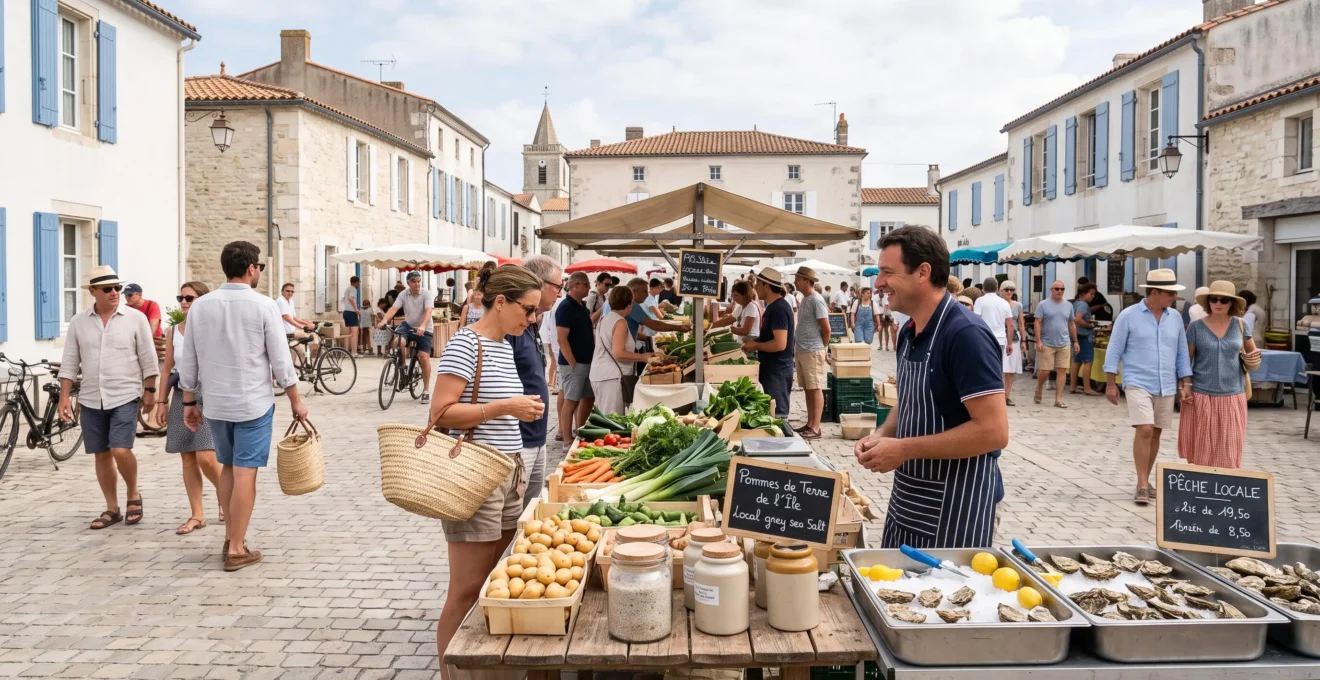
To experience the best of Île de Ré’s gastronomy, start at the markets of La Flotte, Ars-en-Ré or Le Bois-Plage-en-Ré, taste oysters near La Flotte or Loix, explore the island’s salt marshes and enjoy freshly prepared seafood in a harbour restaurant. Each setting reveals a different aspect of this French Atlantic island’s food culture.
The most rewarding choice depends on what you enjoy: discovering seasonal ingredients, meeting producers, understanding traditional food production or sitting down for a complete meal. Combining these experiences offers a fuller introduction to Île de Ré than choosing one restaurant alone.
Explore Île de Ré’s food markets
Village markets are an accessible introduction to the island’s culinary identity. They bring together seafood, vegetables, bread, cheeses and regional products, often within walking distance of a village centre or harbour.
Rather than searching for a single best market, choose according to the setting and shopping experience you prefer.
| Market | Distinctive setting | Good choice for |
|---|---|---|
| La Flotte | Covered, medieval-inspired market architecture | Shopping in a historic village atmosphere |
| Ars-en-Ré | Lively village surroundings near the harbour | Combining food shopping with village exploration |
| Le Bois-Plage-en-Ré | A large, varied market described by the tourist office as the island’s largest | Browsing a broad range of stalls |
| La Couarde-sur-Mer | Friendly village-market atmosphere | Relaxed shopping during a local outing |
| Loix | Smaller, more intimate market setting | A quieter stop focused on local food |
At a produce stall, look for the origin of the goods rather than assuming everything sold on the island was grown there. Île de Ré potatoes, locally harvested salt and seafood are especially relevant choices. Regional cheeses and other Atlantic products also contribute to the range available.
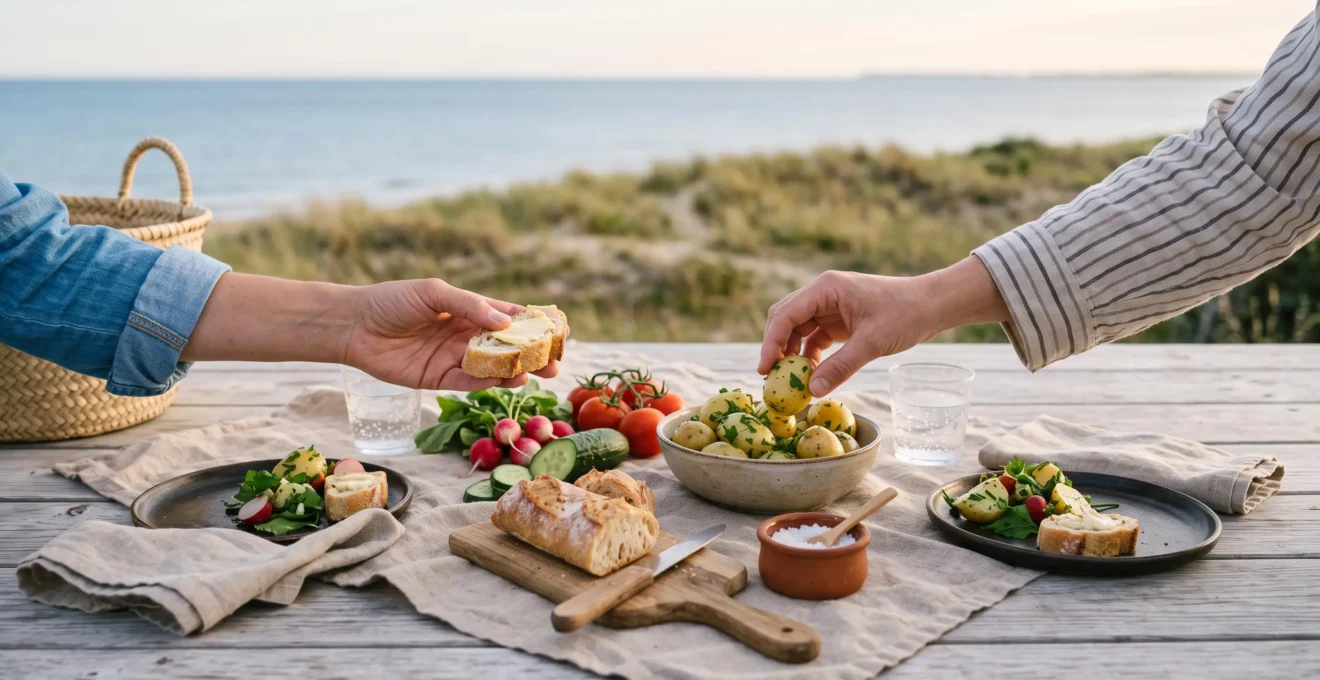
A market visit can become a simple culinary experience in its own right: select bread, vegetables and seasonal products, then prepare a picnic in a suitable coastal spot. Check the market’s operating days before travelling, particularly outside the main holiday season.
Taste oysters where they are produced
Oysters are one of Île de Ré’s defining gastronomic experiences. Around La Flotte, La Passe in Loix and parts of Les Portes-en-Ré, oyster-production areas include huts and terraces where visitors can enjoy a tasting close to the water or marshes.
This differs from restaurant dining. At a producer’s hut, the main attraction is the oyster itself, its freshness, the surrounding landscape and the connection to local aquaculture. A restaurant generally offers a more extensive selection of prepared dishes.
Oyster huts are part of a wider island food culture built around village markets, seafood and local producers. The official island food guide identifies tasting areas around La Flotte, La Passe in Loix and Les Portes-en-Ré, giving visitors useful starting points rather than a ranking of individual venues.
Some visitors prefer oysters simply served with lemon or bread; others enjoy them alongside a local white wine. The oyster-hut experience also belongs to broader French Atlantic food traditions, as documented by France’s national tourism organisation. Serving styles and accompaniments nevertheless vary between establishments.
Before choosing a hut, check whether it welcomes visitors for on-site tasting, what it serves and whether a reservation is appropriate. Not every production site operates as a dining venue. If oysters are not your preference, the island’s restaurants also offer opportunities to enjoy mussels, fresh fish and other seafood.
Discover salt marshes and island specialities
Île de Ré’s gastronomic identity extends beyond the shoreline. Its marshes, cultivated land and vineyards show how local geography influences what people produce and eat.
Sea salt and fleur de sel
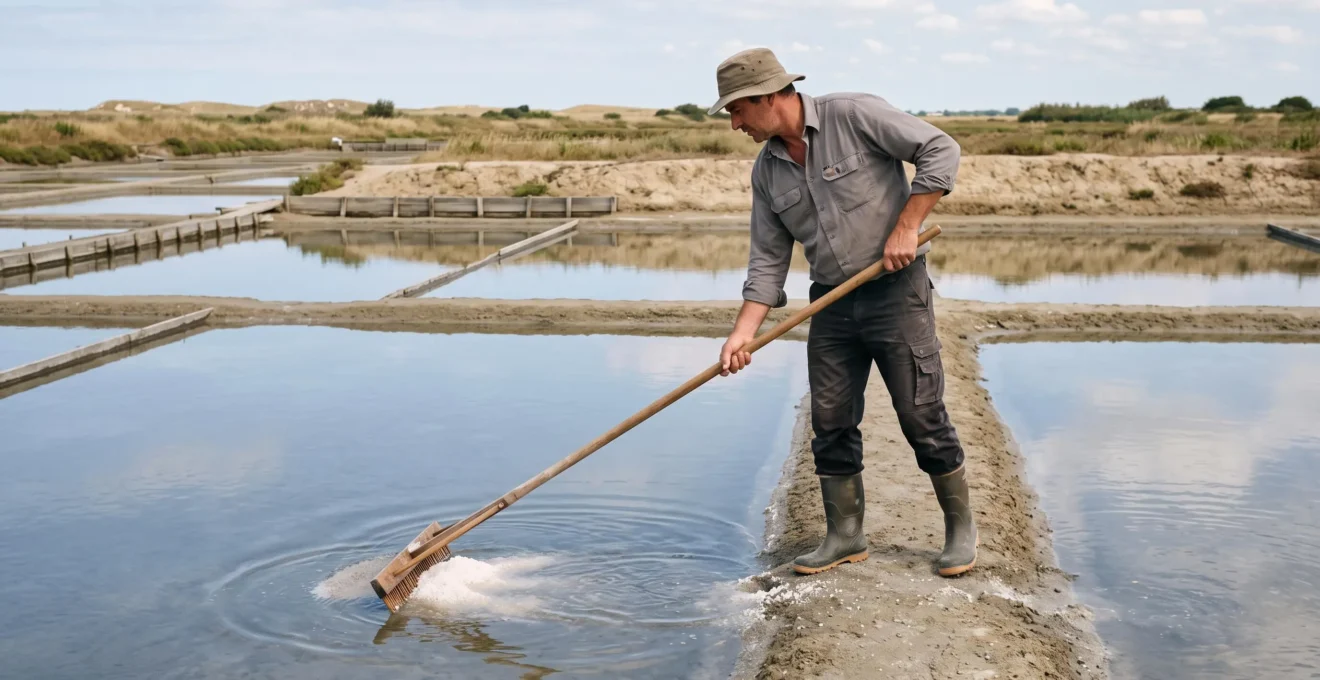
In the salt marshes, seawater moves through shallow basins and gradually evaporates under suitable weather conditions. Salt workers then collect the resulting crystals using traditional tools. Fleur de sel is harvested carefully from the surface under appropriate conditions.
A visit to a salt producer can make this process easier to understand. Instead of seeing only a finished packet of salt, visitors can observe how water, evaporation, the marsh landscape and manual harvesting contribute to production.
Potatoes, samphire and local wines
Île de Ré potatoes are another emblematic speciality. Their protected designation of origin helps distinguish qualifying potatoes from ordinary produce, although it does not mean every potato sold at an island market carries that designation. These small potatoes are particularly associated with seasonal local cooking.
Samphire, also called salicornia, grows in coastal marsh environments and provides a distinctive salty, vegetal ingredient. The island also produces wines, while Pineau des Charentes and Cognac connect its food culture with the wider Charente region.
Check the origin: An island market may sell both Île de Ré produce and goods from the wider region. Ask where a product was made, whether it is in season and whether a protected designation applies when provenance matters to your purchase.
Salt, potatoes and marsh-grown ingredients show how landscape and traditional production shape the island’s food identity. Understanding the origins of regional specialities helps explain why provenance matters when choosing a product at a market.
Choose a seafood restaurant or harbour meal
For a complete meal, Saint-Martin-de-Ré, La Flotte and Ars-en-Ré are useful places to explore. Their restaurant scenes include traditional cooking, informal dining and more elaborate interpretations of French coastal cuisine.
The right restaurant is not necessarily the most elaborate one. A casual bistro can suit a relaxed lunch, while a harbour restaurant may appeal to visitors who want to combine seafood with the atmosphere of a coastal village. A more refined establishment may be preferable for an extended evening meal.
Before choosing, compare the actual menu rather than relying solely on a restaurant’s setting. Look for the fish or shellfish being served, how dishes are prepared, whether seasonal vegetables feature and whether local sourcing is explained. An establishment offering seafood does not necessarily source every ingredient from the island.
Menus and availability can change with the seasons. Booking ahead is sensible for a summer dinner, especially when you have a particular restaurant or dining time in mind. It remains worth confirming opening arrangements directly rather than assuming every venue operates throughout the year.
Plan your own gastronomic route
A food-focused visit is often more satisfying when it combines different activities instead of several similar meals. A market, an oyster tasting and a salt-producer experience each reveal something different about the island.
- Start at a village market. Choose La Flotte, Ars-en-Ré or another market that suits your location and interests. Browse seasonal produce and select ingredients for a simple lunch.
- Enjoy a seafood tasting. Look for an oyster hut around a documented production area and check whether it offers tastings to visitors.
- Explore salt-making heritage. Arrange a suitable producer visit or visitor experience to understand how salt is harvested from the marshes.
- Finish with a harbour meal. If you want a longer dining experience, choose a restaurant according to its menu, setting and availability.
This is a flexible sequence, not a fixed tour. Travelling distances, opening arrangements and the location of your accommodation may make a different order more practical. For a shorter visit, a market followed by one producer tasting can already provide two complementary experiences.
- Confirm the market’s opening day for your travel date.
- Check whether your chosen oyster hut offers on-site tasting.
- Verify visiting arrangements for a salt producer or marsh experience.
- Consider reserving a restaurant for a summer evening.
- Ask about food provenance and seasonal availability when shopping.
Food experiences need not involve a complicated itinerary. Select places according to what interests you, allow time to enjoy each stop and adapt your plans to the island’s seasonal rhythm.
Choose your experience according to what you want from the visit: a village market for seasonal variety, an oyster hut for a direct tasting, a salt producer for insight into traditional harvesting, or a harbour restaurant for a complete seafood meal. If time allows, combining two different experiences offers a broader introduction to the island’s food culture.